CUSP Advanced
Program Lifecycle
CUSP Program Lifecycle helps agencies manage and monitor every stage of the child care journey, from application and eligibility determination through program exit. It helps teams track timelines, monitor compliance and performance, identify and address bottlenecks and barriers to accessing care, and improve program operations.
Understand the Full Participant Journey
Gain visibility into how families move through the child care system, from initial application through program exit.
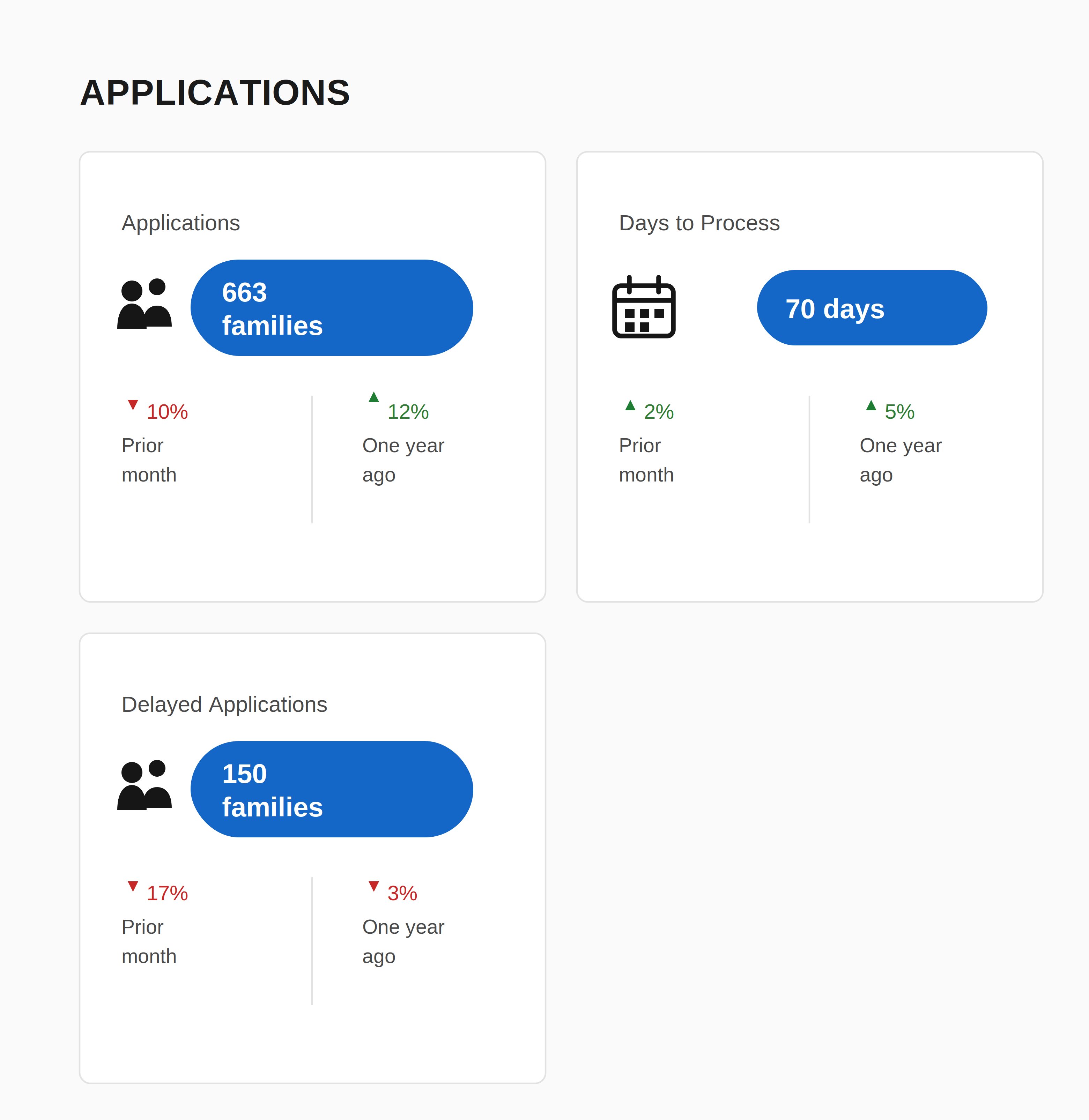
Application
Track application volume, intake activity, and processing timelines to identify where delays begin.
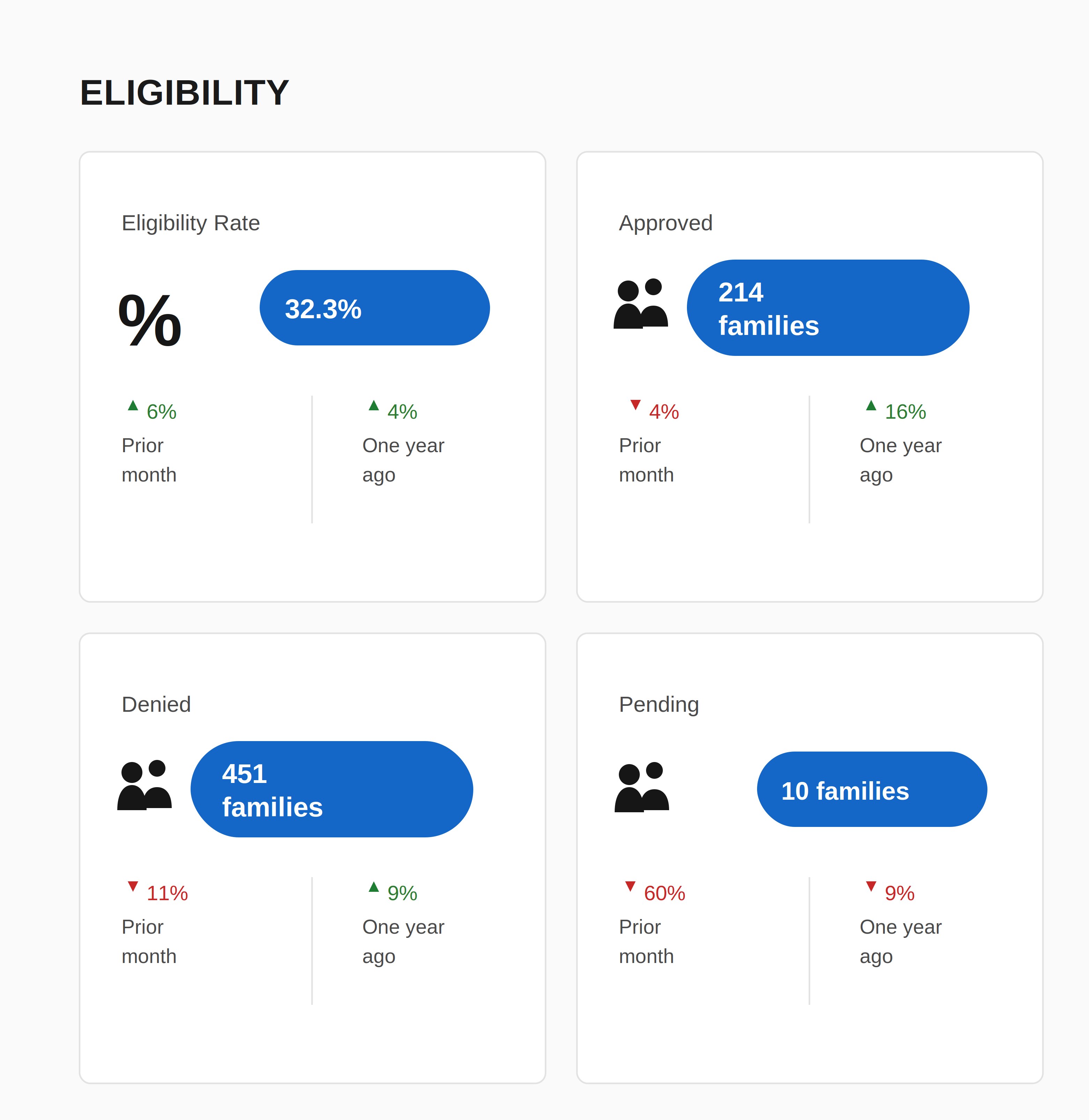
Eligibility
Monitor eligibility determinations, processing times, and approval rates to assess how efficiently families move from application to authorization.
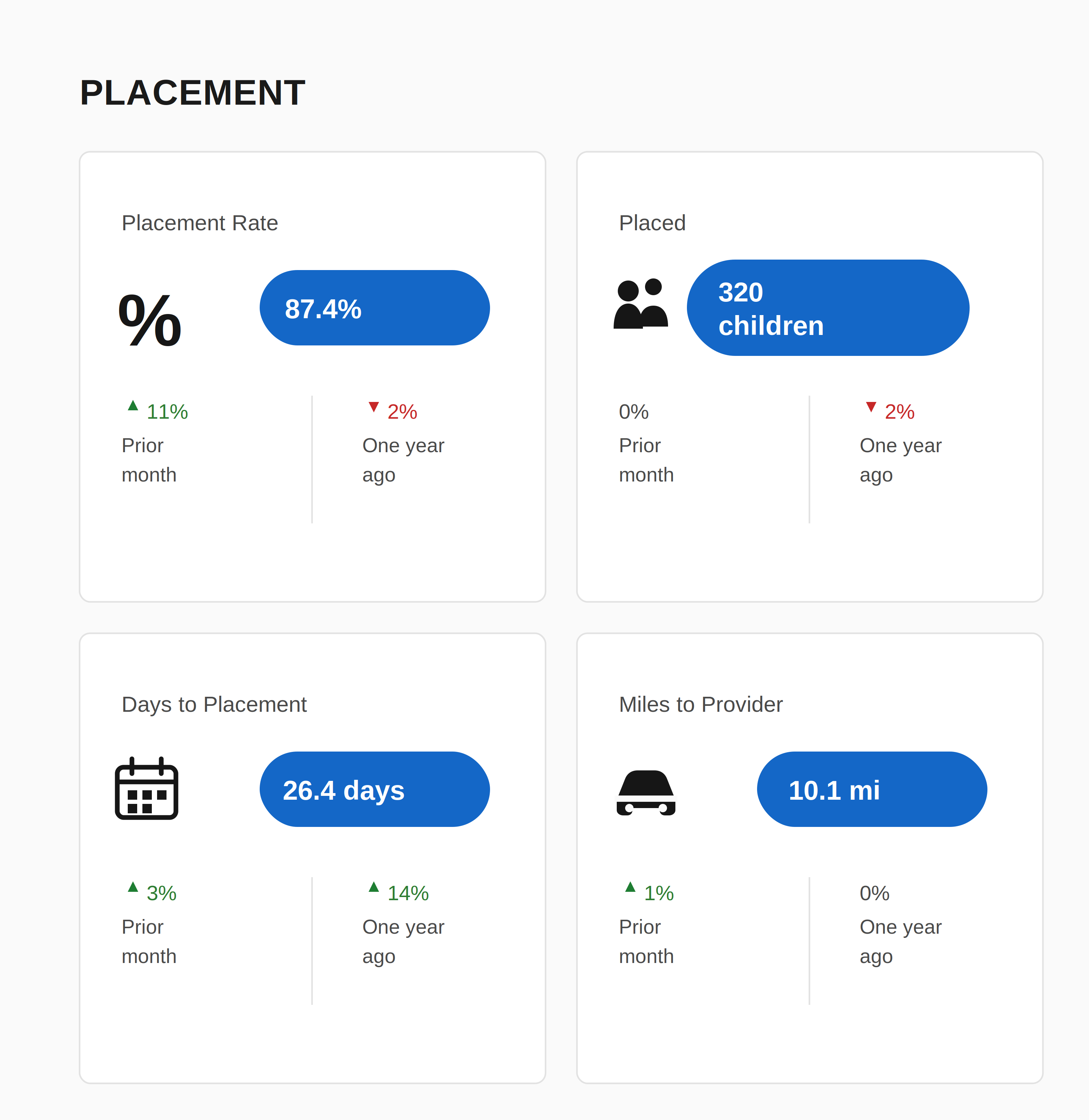
Placement
Measure time to placement, provider selection patterns, and geographic access to identify barriers to that prevent eligible families from accessing care.
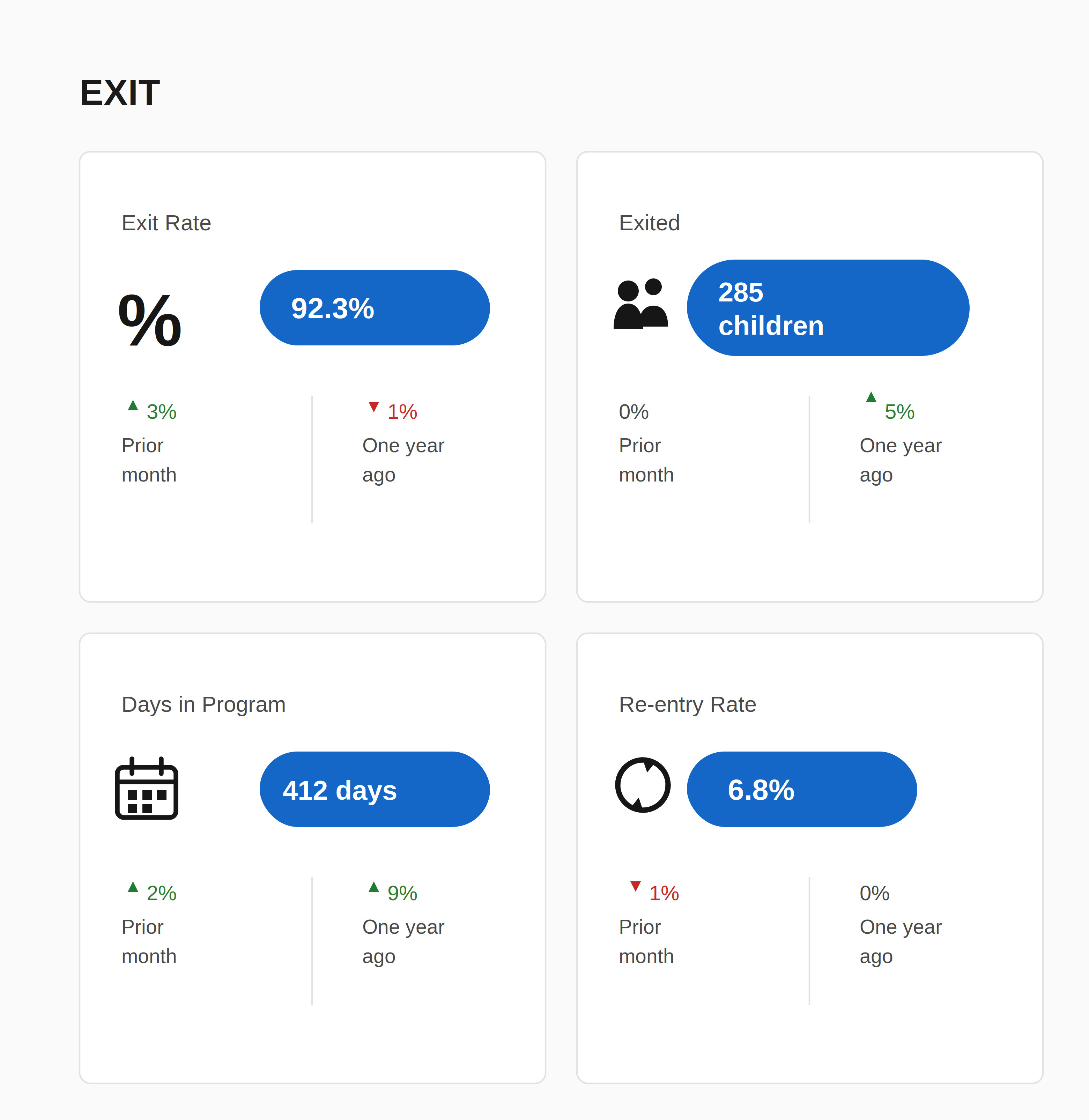
Program Exit
Track completion rates, length of participation, and reasons for exit to understand whether families leave services because they encountered barriers to continued participation.
How Agencies Use Program Lifecycle
Identify where children and families are falling through the cracks. Pinpoint the stage of the child care journey where delays or process breakdowns are causing families to lose access to services.
Track performance. Monitor key operational metrics, such as processing times, eligibility and placement rates, and attendance trends against established benchmarks.
Take action to address why families leave care. Identify and remove barriers to program completion — such as transportation challenges or long wait times for placement.
Frequently Asked Questions
CUSP Program Lifecycle is an analytics tool from 3Si that helps state and local child care agencies track every family's journey through a subsidy program, from application and eligibility through provider placement and program exit. It shows where families are delayed or drop out, so agencies can fix bottlenecks and keep eligible families connected to care.
Program Lifecycle tracks four stages: application, eligibility, placement, and program exit. It measures application volume and processing times, eligibility determinations and approval rates, time to placement and geographic access, and completion rates, length of participation, and reasons for exit. Cohort tracking follows groups of families who entered at the same time through each later stage.
Program Lifecycle compares actual processing times at each step against expected benchmarks to pinpoint delays, such as at eligibility review, provider matching, or placement confirmation. It also tracks reasons for exit, so agencies can see whether families leave because of barriers like transportation or long placement waits, and step in before more families drop off.
Program Lifecycle continuously measures program timelines against regulatory benchmarks and flags when a threshold is approaching or has been missed. It also produces audit-ready documentation, which reduces the manual work of showing compliance with federal and state requirements for programs such as Child Care Assistance Programs (CCAP) and Head Start.
Yes. Program Lifecycle segments and compares outcomes by geographic region, demographic group, age range, subsidy type, and program type. For example, an agency can compare intake processing times and placement rates across counties or provider networks to reveal gaps in access to care.
Child care management software is built for running individual child care centers, while Program Lifecycle is built for public agencies that oversee child care programs. It tracks thousands of participants across many providers and funding streams, giving agencies a system-wide view that center-level software doesn't provide.
Yes. Program Lifecycle runs on the 3Si platform, built on Microsoft Azure, where each state's data is isolated in its own environment, encrypted at rest and in transit, and monitored 24/7.
Ready to improve program operations?
See how CUSP Program Lifecycle helps agencies identify delays, monitor performance, and manage services more effectively.